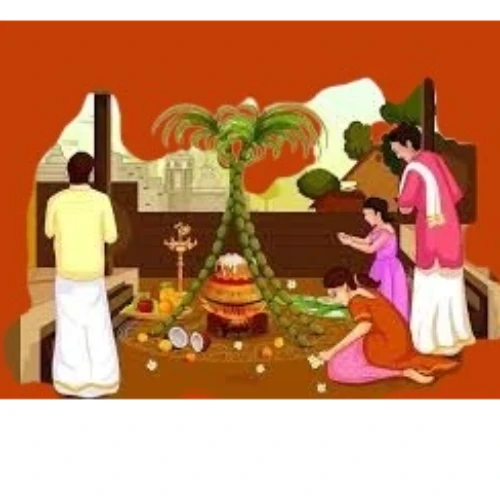
Story of Pongal
Pongal, celebrated predominantly in Tamil Nadu, is a harvest festival dedicated to the Sun God, Surya. The festival’s name comes from the Tamil word "pongu," meaning "to boil over," symbolizing abundance and prosperity. It is said to have originated from ancient agrarian practices, where farmers expressed gratitude for a bountiful harvest. According to mythology, Pongal is associated with Lord Krishna, who lifted the Govardhan Hill to protect villagers from torrential rains caused by Lord Indra.
Importance of Pongal
Pongal holds immense cultural and religious significance, marking the beginning of the Tamil calendar’s month of Thai. It symbolizes gratitude towards nature, especially the Sun, rain, and cattle, for their roles in agriculture. Pongal also fosters unity and strengthens family bonds as it brings people together to celebrate prosperity. Additionally, it aligns with Makar Sankranti, celebrated across India in different forms, emphasizing the importance of agrarian traditions.
Methods of Celebrating Pongal
Bhogi Pongal (First Day)
The first day of Pongal, known as Bhogi, involves cleaning and discarding old items to make way for new beginnings. People light bonfires and celebrate with joy and music.
Surya Pongal (Second Day)
On the second day, families prepare the traditional dish "Pongal," made from newly harvested rice, jaggery, and milk. It is offered to the Sun God as a mark of gratitude.
Mattu Pongal (Third Day)
The third day, Mattu Pongal, is dedicated to cattle, recognizing their contribution to farming. Cows and bulls are adorned with garlands and fed special treats.
Kaanum Pongal (Fourth Day)
The final day, Kaanum Pongal, is about social gatherings and strengthening relationships. Families exchange gifts, visit loved ones, and enjoy traditional dances and songs.
Upcoming Pongal date
- 15 January 2027, Friday