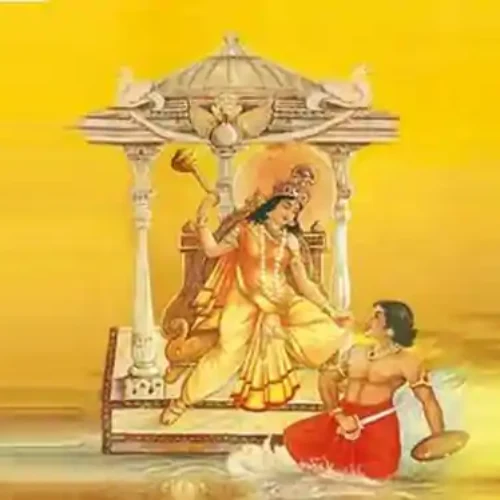
Fierce mantras related to Goddess Chamunda and Baglamukhi hold a special place in the Tantric and Shakta traditions of spiritual practice. The text presents descriptions of the fierce form of Goddess Chamunda, Bhairavi-Bhairava, various divine powers, and finally, mantras related to Mata Baglamukhi.These mantras are different from ordinary stotras or simple Goddess mantras. They contain Tantric terminology related to stambhan, enemy-removal, exorcism, protection, protection from negative forces, and the fierce power of the Goddess.
Therefore, rather than considering such mantras merely as part of general worship, it is appropriate to understand them in the context of the relevant Shakta/Tantric tradition and guru-guidance.
Chamunda and Baglamukhi Fierce Mantra Recitation
om namo bhagavati chaamunde narakankagrudholuk parivar sahite
shmashanpriye nararudhir mans charoobhojan priye siddh
vidyadhar vrund vandit charane bramesh vishnu varun kuber bhairavi bhairavapriye
indrakrodh vinirgat sharire dvadashaaditya
chandaprabhe asthi mund kapal malabharane shigram dakshin
dishi aagacchhagach manaya-manaya nud-nud
amukam maraya-maraya, choornaya-choornaya,
aaveshayaveshaya trut-trut, trotaya-trotaya
sphut-sphut sphotaya-sphotaya mahabhutan jubbhaya-jubbhaya
bramarakshasan-uchatayochataya bhut pret pishaachan
murchchhaya-murchchhaya mam shatrun uchatayochataya
shatrun choornaya-choornaya satyam kathaya-kathaya
vrukshebhyah sannashaya-sannashaya arkam stambhaya-stambhaya
garood pakshpaten visham nirvisham kuru-kuru
lilangalaya vrukshebhyah paripataya-paripataya
shailakananamahim mardaya-mardaya mukham
utpatayotpataya patram puraya-puraya bhut bhavishyam
taysarvam kathaya-kathaya krunt-krunt dah-dah pach-pach math-math pramath-pramath gharghar-gharghar grasaya-grasaya vidravaya – vidravaya
uchatayochataya vishnu chakren varun pashen
indravajren jvaram nashaya – nashaya
pravidam sphotaya-sphotaya sarva shatrun mam vasham
kuru-kuru patalam prutyantariksham akashagraham anayanaya
karaali vikaraali mahakali rudrashakte purva disham
nirodhaya-nirodhaya paschim disham stambhaya-stambhaya
dakshin disham nidhaya-nidhaya uttar disham
bandhaya-bandhaya hram hrim om bandhaya-bandhaya jvalamalini
stambhini mohini mukut vichitra kundal nagadi
vasuki krutahar bhushane mekhala chandraarkahas
prabhanjane vidyutsphurit sakash saattahase
nilaya-nilaya hum fat-fat vijrumbhit sharire
saptadvipakrute bramand vistarit stanayugale
asimusal parashutomarakshuripashahaleshu viran shamaya-shamaya
sahasrabahu paraparadi shakti vishnu sharire shankar hridayeshvari bagalaamukhi sarva dushtan vinashaya-vinashaya hum fat svahaa.
om hlrim bagalaamukhi ye kechanapkarinah santi
tesham vacham mukham padam stambhaya-stambhaya
jihvaam kilaya – kilaya budhim vinashaya-vinashaya hrim om svahaa .
om hrim hrim hili-hili amukasya vacham mukham
padam stambhaya shatrum jihvaam kilaya shatrunam
drushti mushti gati mati dant talu jihvaam
bandhaya-bandhaya maraya-maraya shoshaya-shoshaya hum fat svahaa..Form of Goddess Chamunda
Goddess Chamunda is considered to be the chief of the fierce forms of the goddess. They are associated with the religious concept of Shakti, the destruction of evil forces and the destruction of iniquity. This fierce form of Goddess is of special importance in the tradition of Devi Mahatmya.
Spiritual emotions like victory over fear, protection from negativity and cultivation of power are considered to be prominent in the worship of Chamunda. It contains a variety of tantric prayers and invocative descriptions of the fierce form of the goddess Mention of powers
Prayer for protection from ghosts, ghosts, vampires etc.
Prayer for removal of enemies and negative forces
Tantric words related to stamping and exaltation
Invocation of Goddess Bagalamukhi
Related to controlling speech and intelligence Mantra parts
are found.
The initial text of the mantra
The text provided by you is as follows:
Om Namo Bhagavati Chamunde Narakankagridholuk parivar sahite shmashanapriye nararudhir masa charu
Bhojan priye siddha vidyadhar vrinda vandita charane brahmesh vishnu Varuna Kubera Bhairavi Bhairavapriye.
Then the fierce form and various powers of the goddess are invoked.
Indrakrodha Vinirgata Sharire
The text addresses the goddess as the most brilliant and fierce power:
Indrakrodha Vinirgata Sharire Dvadashaditya Chandaprabhe Asti Munda Kapal Malabharane...
Here the tantric symbols like splendour, ferocity and skull-beads of the goddess are described.
Further, the text prays to the goddess to awaken various powers and remove obstacles A part of the Raksha
Mantra mentions various subtle and negative forces:
Mahabhutan Jrimbhaya-Jrimbhaya
Brahmarakshasan Uchchatyochchatay Bhoot Pret Pisachan...
From a religious point of view, such mantras are protected from negative forces and obstacles of prayer.
Their purpose is not to harm any real person, but should be seen as the seeker’s desire for freedom from fear and obstacles in the religious tradition is:
Garuda pakshapatena visham nirvisham kuru-kuru...
Further:
Vishnu chakrena Varuna pashena Indravajrena jvaram nashaya-nashaya...
These mantras contain obstacles and crises through the symbols of various divine powers
They are appropriately understood in the traditional religious context as the spirit of divine protection and crisis-relief.
Karali, Vikarali and Mahakali
The mantra mentions many fierce forms of the goddess:
Karali Vikarali Mahakali Rudrashakte...
Names like Karali, Vikarali and Mahakali symbolize the fierce power of the goddess. In the Shakta tradition, the fierce form of the goddess is considered to be the symbol of the destruction of iniquity, fear and negativity.
Invocation of Goddess Bagalamukhi
The last part of the text clearly mentions Mata Bagalamukhi: The Bagalamukhi mantra comes:
Om Hlrim Bagalamukhi Ye Kechanapkarina Santi Tesham Vacham Mukham Padam Stambhaya-Stambhaya
Jihvan Keelaya-Keelaya Buddhim Vinashaya-Vinashaya Hrim Om Svaha.
Bagalamukhi is considered to be one of the most important goddesses in the ten great sciences. His sadhana is traditionally associated with stambhana shakti.
In a spiritual sense, it can also be understood as a prayer to stop uncontrolled speech, negativity and obstacles. Its basic tantric meaning is related to control of speech and negative influences.
For the ordinary seeker, its positive spiritual meaning can be taken as follows: Desire
Developing self-control
Remembering Goddess in situations of fear and opposition
Importance of “Hum Phat” in Mantra
In Tantric mantras, alphabets and mantra passages like Hun and Phat often appear.
Their meaning is not translated directly like normal words. In Tantric traditions they are seen as distinctive seed sounds and power-indicating mantra letters.
Therefore, it is more appropriate to pronounce and use them according to the Guru tradition.
Is this a general worship mantra?
This text does not fall into the category of general simple goddess mantras. It mentions uses like Ugra Tantric terminology, invocation, stambhana and Uchatana.
Therefore, it is more appropriate to understand it as:
Tantric/Ugra Sadhana-Path rather than ordinary daily worship mantra should.
Religious sentiments associated with the recitation
The spiritual purpose of this type of fiery Devi recitation can be broadly attributed to the following sentiments: Prayer
Wish for self-strength
Protection from injustice
Mental firmness
Meditation of the fierce form of the goddess
Precautions while reciting
Care must be taken regarding such tantric mantras.
1 Guru Guidance
It is advisable to seek guidance from a worthy guru of the tradition rather than starting chanting and rituals of fierce tantric mantras of one’s own free will.
2. Do not change the mantra
The seed mantra, words and pronunciation should not be changed on your behalf.
3 Avoid the feeling of harming a person
The fiery terminology used in the spell is better understood in terms of self-defense, dispelling of negativity and spiritual practice rather than being used against a person.
4. Understand the difference between normal worship and tantric sadhana
Every devi mantra is not necessarily equally suitable for all seekers.
5 Prioritize mental peace
If a mantra or sadhana causes fear or mental trouble, consult an experienced religious teacher instead of using it yourself.
Simple Option: Remembering Goddess Bagalamukhi
Those seekers who only want to do general remembrance of the Goddess, according to their tradition, simply:
ॐ Bagalamukhyai Namah॥
This simple name-mantra is different from the fierce tantric experiments and can be used to express devotion to the goddess.
FAQ: Chamunda and Bagalamukhi fierce mantras
1 Which goddess is this mantra associated with?
The present text mainly mentions the ferocious powers of Chamunda Devi and Bagalamukhi Devi. It is accompanied by the remembrance of Bhairavi, Bhairava and other devashaktis.
2 Is this a normal goddess spell?
No. It contains many words and expressions related to the Tantric and Ugra mantra traditions. Therefore, it should not be understood as a normal hymn.
3. Goddess Bagalamukhi is considered to be associated with which power?
Bagalamukhi is considered to be associated with stambhana shakti in the Shakta tradition in particular. His practice is dominated by the concept of speech and blocking opposing influences.
4. Should this spell be used to harm an enemy?
It is not appropriate to promote such uses. From a religious perspective, mantra practice is better understood as self-protection, removal of negativity and spiritual practice.
5. Can this mantra be chanted without a guru?
Given the fiercely tantric nature of the presented text, it is not considered appropriate to begin its special practice without proper guidance. It is better to seek guidance according to the Guru-tradition.
6 What is the meaning of “Hum Phat”?
“Hum” and “Phat” are special mantra letters used in Tantric mantras. Rather than extracting their general semantics, they are understood as seeds or power-indicating sounds.
This mantra recitation related to Chamunda and Bagalamukhi contains the vocabulary of the fierce Shakta and Tantric traditions
Such mantras are more appropriate to be understood in terms of divine power, self-defense, freedom from negativity and spiritual discipline rather than merely in terms of fear or enemy destruction