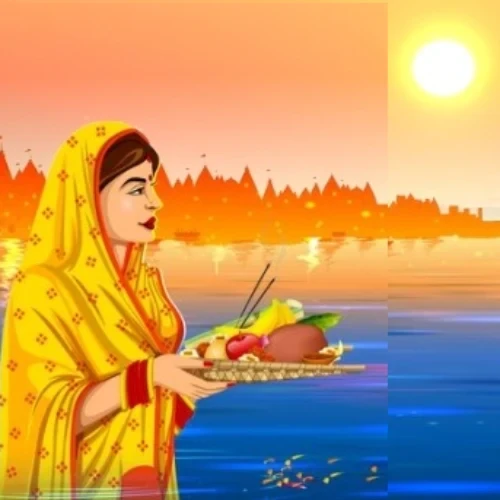
Chhath Puja is one of the major folk festivals of India dedicated to Sun God and Chhathi Maiya. This festival is celebrated with reverence and devotion especially in Bihar, Jharkhand, Eastern Uttar Pradesh and some areas of Nepal. Now Chhath Puja is widely celebrated in other parts of the country as well.
Chhath festival has the tradition of offering Arghya to Sun God, worshipping Chhathi Maiya and fasting. The speciality of this festival is that in this Arghya is offered to both the setting sun and the rising sun.
Importance of Chhath Puja
According to religious beliefs, Sun God is considered the source of life, energy and light. In Chhath Puja, Chhathi Maiya is remembered along with the worship of Sun God.
On this occasion, devotees pray for the happiness, prosperity, health of the family, well-being of the children and peace in life.
Chhath Puja is not only a religious ritual but is also considered a festival of purity, discipline, restraint, gratitude towards nature and family unity.
When is Chhath Puja celebrated?
Chhath Puja is mainly celebrated on Kartik Shukla Shashthi. However, the preparations for its worship and fast begin many days in advance.
Chhath Puja generally lasts for four days:
Nahay-Khaay
Kharna
Sandhya Arghya
Usha Arghya and Parana
Apart from Kartik Chhath, Chaiti Chhath is also celebrated on the occasion of Chaitra Shukla Shashthi.
Four days of Chhath Puja
1. Nahai-Khai
The first day of Chhath Puja is called Nahay-Khai.
On this day, the devotees take a bath and eat food with purity. Generally, the house is cleaned and Satvik food is prepared.
According to tradition, there is a tradition in many families to prepare pumpkin rice, gram dal and other Satvik food on this day.
Nahay-Khai is considered to be the formal beginning of Chhath fast.
2. Kharna
The second day is called Kharna.
On this day, the devotees keep a fast throughout the day and take prasad after the puja in the evening. Generally Jaggery Kheer and Roti are made as Prasad on Kharna.
After the puja, the Prasad is distributed among the family and people nearby.
After Kharna, the devotees proceed towards the difficult Nirjala fast.
3. Sandhya Arghya
The third day of Chhath Puja is considered to be one of the most important days. On this day, Sandhya Arghya is offered to the setting sun in the evening.
The devotees and family members go to the banks of the river, pond, ghat or other water body carrying puja materials.
Standing in the water at the time of sunset, Arghya is offered to the Sun God and Chhathi Maiya is worshipped.
On this occasion, a special atmosphere of traditional Chhath songs and folk devotion is seen.
4. Usha Arghya and Parana
On the fourth and final day of Chhath Puja, Usha Arghya is offered to the rising Sun in the morning.
The devotees reach the ghat before sunrise and wait for the Sun God to rise. After sunrise, the puja is completed by offering Arghya.
After this, the devotees perform Paran and the fast ends.
Arghya to Sun God in Chhath Puja
Offering Arghya to Sun God is one of the most important traditions in Chhath Puja.
While offering Arghya, the devotees stand in water, remember Sun God and offer water. With this, prayers are offered for the happiness, peace, health and prosperity of the family.
Water is offered to the setting sun in Sandhya Arghya and to the rising sun in Usha Arghya the next day.
Worship of Chhathi Maiya in Chhath Puja
Chhathi Maiya is worshipped in Chhath Puja. In folk tradition, she is worshipped with devotion as the goddess associated with the welfare of children and family.
Devotees pray to Chhathi Maiya for the happiness and peace of the family, welfare of children and fulfillment of wishes.
Religious beliefs of Chhath Puja may vary according to the region and family tradition.
Materials for Chhath Puja
The materials used in Chhath Puja may vary depending on the region and family tradition. These generally include:
Bamboo basket or soup
Thekua
Jaggery
Wheat flour
Rice
Fruits
Sugarcane
Coconut
Banana
Lemon
Water chestnut
Suthni
Ginger
Milk
Lamp
Incense
Flowers
Holy water
The tradition of carrying puja materials decorated in a soup or basket to the ghat is.
Main Prasad of Chhath Puja: Thekua
Thekua is a famous traditional Prasad of Chhath Puja. It is made from wheat flour, jaggery or sugar, and ghee.
Thekua is also known by local names like khajur or tikri in many places. It is prepared at home with purity and devotion.
Importance of Sugarcane in Chhath Puja
Sugarcane is specially used in Chhath Puja. The tradition of decorating the puja site with sugarcane at the ghat and placing sugarcane along with the Prasad is prevalent in many regions.
Expressing gratitude to the Sun and nature through fruits, sugarcane, and other natural materials is also associated with this festival.
Folk Songs of Chhath Puja
Traditional folk songs have special significance during Chhath Puja. Women and other family members sing folk songs related to the glory of Chhathi Maiya and Sun God.
These songs express devotion, family sentiments, folk culture and reverence towards Chhathi Maiya.
Importance of cleanliness in Chhath Puja
Special attention is given to cleanliness and purity in Chhath Puja.
Special rules are followed in many families, from cleaning the house to preparing the prasad and preparing the puja materials. The tradition of keeping the utensils and materials used for the puja separate is also seen in many houses.
Cleanliness of the ghat and surrounding areas is also an important social feature of the Chhath festival.
Fasting in Chhath Puja
The Chhath fast is considered to be a fast of strict discipline and restraint. The devotees observe fast in several stages and there is a tradition of observing Nirjala Vrat after Kharna.
In case of any health related problem, pregnancy, old age or need to take medication, it is advisable to take medical advice before observing strict fast.
In religious traditions, the rules of fasting may vary according to the family and region.
Spiritual message of Chhath Puja
In Chhath festival, gratitude towards light, energy and life is expressed through worshipping the Sun.
A beautiful message of this festival is also believed to be that man should have respect for nature, water, Sun and environment.
In Chhath Puja, people rise above rich-poor, age and social differences and worship together at the ghat. This is the special identity of its folk tradition.
General questions related to Chhath Puja
How many days does Chhath Puja last?
Chhath Puja mainly lasts for four days - Nahai-Khai, Kharna, Sandhya Arghya and Usha Arghya.
Who is worshipped in Chhath Puja?
Mainly Sun God and Chhathi Maiya are worshipped in Chhath Puja.
Who is offered Arghya first in Chhath Puja?
Sandhya Arghya is offered to the setting sun in the evening on the third day and Usha Arghya is offered to the rising sun in the morning on the fourth day.
What is the main Prasad of Chhath Puja?
Thekua is the main traditional Prasad of Chhath Puja. Apart from this, jaggery, fruits, sugarcane and other prasad items are offered.
What is Kharna in Chhath Puja?
Kharna is the second day of Chhath Puja. On this day, after fasting the whole day, the devotees perform puja in the evening and take prasad.
Is Chhath Puja celebrated only in Bihar?
No. Apart from Bihar, Chhath Puja is also celebrated with devotion in Jharkhand, Eastern Uttar Pradesh, some areas of Nepal and many other parts of the country.
Chhath Puja is the main folk festival of worshipping Sun God and Chhathi Maiya. This four-day long festival has a special tradition of Nahai-Khai, Kharna, Sandhya Arghya and Usha Arghya.
Offering Arghya to both the setting and rising sun, preparing Thekua and other Prasad, cleaning the ghat and collective worship make this festival special.
The basic spirit of Chhath Puja is associated with devotion, restraint, cleanliness, gratitude towards nature and prayer for the well-being of the family.
Jai Chhathi Maiya. Jai Surya Dev.
Upcoming Chhath Puja dates
- 15 November 2026, Sunday