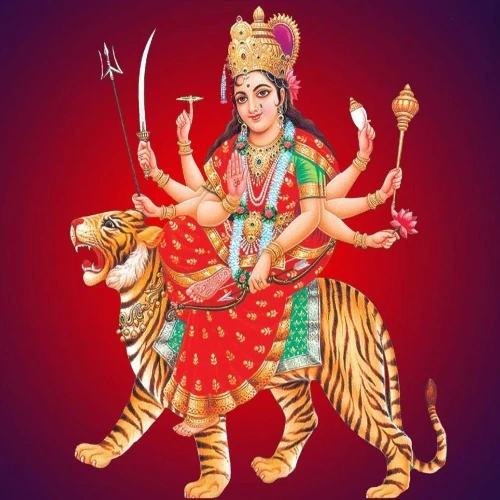
Ambe Mata is one of the principal and most revered forms of Goddess Shakti in Hinduism. She is associated with various manifestations such as Maa Durga, Jagdamba, Bhavani, and Adishakti. Devotees worship Maa Ambe to seek strength, courage, peace, happiness, and the well-being of their families.
The word 'Amba' or 'Ambe' is associated with the concept of 'Mother.' Consequently, the form of Ambe Mata symbolizes compassion, maternal love, and protection for her devotees.
Maa Ambe is worshipped with great devotion, particularly during Navaratri. A unique tradition of devotion to Ambe Mata and the performance of Garba is observed in many regions of India, including Gujarat and Rajasthan.
Religious Significance of Ambe Mata
In Hinduism, Goddess Shakti is regarded as the primordial energy of the universe. Ambe Mata is considered a popular manifestation of this Adishakti (Primal Power).
Her divine form instills in devotees the belief that one must maintain strength, patience, and courage even in difficult circumstances. According to religious belief, the Mother protects her devotees and inspires them to combat unrighteousness and negative forces.
The Form of Ambe Mata
Ambe Mata is typically depicted in a divine and radiant form. Various weapons are seen in her multiple hands; these weapons symbolize the Goddess's diverse powers and the destruction of unrighteousness.
The lion is considered the Mother's divine vehicle (vahana). The lion symbolizes courage, strength, and fearlessness. The image of Maa Ambe seated upon a lion inspires devotees to walk the path of righteousness fearlessly.
Ambe Mata and Goddess Durga
In many religious traditions, Ambe Mata is worshipped as a manifestation of Goddess Durga and Adi Shakti (the Primordial Energy). Various names and forms of the Goddess are revered across different regions and traditions.
Names such as Durga, Bhavani, Jagdamba, Ambika, and Ambe are associated with the widespread tradition of worshipping the Divine Feminine (Shakti).
Therefore, the worship of Ambe Mata is also linked to the worship of Goddess Durga.
The Mythological Legend of Ambe Mata
Many legends concerning Goddess Shakti are found in the Puranas and the Devi Mahatmya. These texts describe how the Goddess destroyed demonic forces and upheld righteousness (Dharma*).
The Devi Mahatmya recounts the famous story of the Goddess's battle against Mahishasura. Manifesting from the combined powers of the gods, the Goddess slew Mahishasura, liberating both the deities and the world from his tyranny.
This legend symbolizes the triumph of divine power and righteousness. The worship of Ambe Mata invokes this very aspect of the Goddess—as a powerful protector.
Ambe Mata and Navaratri
Navaratri is the principal festival dedicated to the worship of Ambe Mata. Over the course of nine days, various forms of Goddess Shakti are worshipped.
During this period, devotees observe fasts, worship the Goddess, chant mantras, and perform the Aarti (ritual of offering light). Religious and cultural events such as Garba, Dandiya, and Devi Jagran (devotional night vigils) are organized in many places.
Special decorations and elaborate worship rituals are arranged in Ambe Mata temples throughout Navaratri.
Worship method of Ambe Mata
Ambe Mata is worshiped with reverence and devotion. The general method of worship can be as follows:
Take bath in the morning and wear clean clothes.
Clean the place of worship.
Install the idol or picture of Maa Ambe.
Light a lamp and incense.
Offer red flowers, intact fruits and fruits to the Mother.
To the Mother Offer naivedya as per devotion.
Chant the mantra of the mother.
Recite Durga Saptashati or Devi Stuti.
Perform the aarti of Ambe Mata.
Finally, pray for the happiness, peace and well-being of the family.
For special ritual or detailed worship method, follow your family tradition or the instructions of a qualified Acharya. It is considered appropriate to follow.
Mantra of Ambe Mata
In the worship of Mother Ambe, a simple mantra of the Goddess can be chanted:
Om Ambikayayi Namah॥
Apart from this, the famous mantra of Goddess Durga is also chanted:
Om Dun Durgaayai Namah॥
It is considered important to chant the mantra with devotion, concentration and devotion. goes.
Aarti of Ambe Mata
The most renowned Aarti dedicated to Ambe Mata is "Jai Ambe Gauri." Devotees sing this Aarti with deep reverence during Navaratri and other occasions of Goddess worship.
Through the Aarti, devotees extol the glory of the Mother Goddess and pray to Her for happiness, peace, strength, and protection.
Offerings Dear to Ambe Mata
Various offerings—such as fruits, sweets, halwa (semolina pudding), chana (black chickpeas), and other sattvic (pure) food items—are presented to Mother Ambe according to one's devotion.
During Navaratri, many devotees serve halwa, chana, and puri as prasad to young girls following the Kanya Pujan ritual. The tradition of these offerings may vary depending on the region and the family's specific worship practices.
The Spiritual Message of Ambe Mata
The form of Ambe Mata symbolizes more than just external power; it inspires the awakening of self-confidence, patience, and positive energy within the human spirit.
The image of the Mother seated upon a lion conveys the message that one should face circumstances with courage rather than yielding to fear.
The various weapons held in the Goddess's hands symbolically convey that the diverse challenges encountered in life can be overcome through wisdom, strength, and firm determination.
Benefits of Worshipping Ambe Mata
According to religious beliefs, worshipping Mother Ambe with devotion grants the devotee mental peace and inner strength. Devotees pray to the Mother to remove life's difficulties and to protect their families.
The key spiritual sentiments associated with worshipping the Mother include:
Courage and self-confidence
Mental peace
Inspiration to stay away from negativity
Happiness and peace for the family
Inspiration to walk the path of righteousness (Dharma) and truth
Devotion and spiritual consciousness
These benefits should be understood within the context of religious and spiritual beliefs.
Prominent Names of Ambe Mata
Many names are revered in the worship of Goddess Shakti. Prominent among them are:
Ambe, Ambika, Durga, Bhavani, Jagadamba, Adishakti, Jagatjanani, Mahishasuramardini, and Chamunda.
Variations in the Goddess's names and forms are also observed according to regional traditions.
Ambe Mata is a highly popular and revered form of Goddess Shakti in Hinduism. She is associated with various forms such as Mother Durga, Jagadamba, and Adishakti. Her radiant form, mounted on a lion, is considered a symbol of power, courage, and fearlessness.
Ambe Mata is worshipped with special fervor during Navaratri. Devotees invoke the Mother through the chanting of mantras, rituals (puja), Aarti, fasting, and hymns praising the Goddess. Devotion to Ambe Mata inspires individuals to move forward on the path of strength, patience, compassion, and truth.