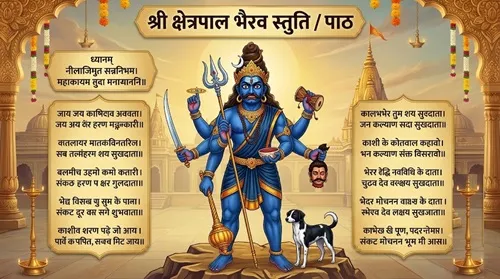
Kshetrapal Bhairav is a significant figure within the religious traditions associated with the protective aspect of Lord Bhairav. The term "Kshetrapal" signifies the guardian or protector of a specific region, place, or premises. Across various Hindu traditions, the deity Kshetrapal is worshipped to ensure the safety and well-being of a particular location.
Special importance is accorded to this protective aspect in the worship of Bhairav as well. Through the recitation of hymns and prayers dedicated to Kshetrapal Bhairav, devotees seek protection, peace, and positivity for their homes, surroundings, and lives.
Who is Kshetrapal Bhairav?
Generally, "Kshetrapal" refers to the deity who protects a specific territory or region. Kshetrapal is worshipped in various forms across different regions and traditions.
When the Kshetrapal tradition merges with the worship of Bhairav, Bhairav is revered as the guardian and overseer of that specific location.
Consequently, the worship of Kshetrapal Bhairav is integral to beliefs concerning the protection of temples, villages, land, buildings, or specific religious sites.
Significance of the Kshetrapal Bhairav Stuti
The purpose of the Kshetrapal Bhairav Stuti (hymn) is to invoke the protective aspect of the deity and seek his divine grace.
Through this recitation, devotees pray for peace in their surroundings, the well-being of their families, and protection against negative influences.
It is important to note that there is no single, universal hymn or text for Kshetrapal Bhairav that is followed across all traditions; the names and wording of the prayers may vary depending on the region or the specific scriptures consulted.
When should Kshetrapal Bhairav be worshipped?
Kshetrapal Bhairav can be worshipped and praised on any day, according to one's devotion.
The following occasions are considered particularly significant for the worship of Bhairav:Kalashtami
Sundays
Tuesdays
Upon entering a new place or building
During special worship ceremonies at a temple or within the locality
Days designated according to local traditions
The timing and method of worship may vary according to the traditions of the specific region.
General Procedure for the Kshetrapal Bhairav Recitation
Clean the place of worship.
Light a lamp before the image or idol of Lord Bhairav or the deity Kshetrapal.
Offer incense and flowers.
Offer fruits or Naivedya (sacred food offering) with devotion.
Meditate upon the Lord.
Chant: “Om Kalabhairavaya Namah.”
Recite the traditional Kshetrapal Bhairav *Stuti* (hymn) or text with devotion.
Finally, pray for the peace and protection of your home, family, and locality.
Simple Mantra for Kshetrapal Bhairav
Om Kalabhairavaya Namah.
If a specific mantra for Kshetrapal Bhairav has been prescribed by your local guru, temple, or tradition, it is appropriate to prioritize that specific mantra.
Sri Kshetrapala Bhairava Stuti / Path
dhyanamkaraalavadanam ghoram nilajeemutasannibham.
digmbaram mahakayam kshetrapalam namaamyaham॥
stuti path
jaya jaya kshetrapal bhagavan,
karahu sada bhaktan kalyan॥
kashipuri ke rakshak dev,
sab sur nar muni karate sev॥
trishul damaru kar men dhare,
vikat rup dhar dusht sanhare॥
kal rup tum ho sukhdayi,
bhaktan ke sankat mitayi॥
dasom dishaaom ke rakhavale,
din anath ko palanavale॥
bhut pret pishaach sab bhage,
tumharo nam sune bhaya jage॥
tum bin kaaj na koi sare,
jo dhyave so nirbhaya fare॥
dharm arth kam moksh data,
jaya kshetrapal jaya jagatrata॥
praarthana evam kshama yachana
kshetrapal namastubhyam sharanagatapalak.
papatap vinashay dehi me sarvamangalam॥
aarogyam dehi me dev budhim vidyam yasho balam.
sarvasankatnashay kshetrapalay te namah॥
Significance of the Kshetrapal Bhairav Stuti
The primary feature of this recitation is its focus on Bhairav’s role as a protector and as Kshetrapal (Guardian of the Territory).
While general Kalabhairav worship often describes the Lord's various forms and glories, the Kshetrapal tradition places greater emphasis on the protection and well-being of a specific place, region, or premises.
Differences from other Bhairav recitations
The Kaalbhairav Chalisa primarily focuses on the immense glory of and devotion to Lord Kaalbhairav.
The Kashi Kaalbhairav Chalisa highlights the special significance of Kaalbhairav specifically in the context of Kashi and his role as the 'Kotwal' (Guardian/Protector) of Kashi.
The Batuk Bhairav Chalisa is dedicated to the worship of the specific form of Batuk Bhairav.
In contrast, the central theme of the Kshetrapal Bhairav Stuti/Path (hymn/recitation) relates to his role as the protector of a specific region or place.
However, the usage of these names and texts may vary across different traditions. Therefore, to determine the precise differences, it is essential to examine the original source and the full text of the specific recitation.
Religious benefits of the Kshetrapal Bhairav recitation
According to religious beliefs, the worship of Kshetrapal Bhairav:
Invokes prayers for the protection and well-being of a place.
Inspires one to stay free from fear and negative thoughts.
Fosters courage and self-confidence within the mind.
Includes prayers for peace within the family and the premises.
Strengthens devotion to Bhairav and spiritual discipline.
These are religious beliefs and should not be regarded as scientifically proven outcomes.
Worship of Kshetrapal Bhairav for homes and premises
When performing rituals at a new home, shop, plot of land, or any other location, one may invoke the deity Kshetrapal in accordance with local traditions.
Such worship may involve standard religious practices such as purifying the space, lighting a lamp, meditating on the deity, and offering prayers for well-being. For specific rituals, it is advisable to seek guidance from a qualified priest or follow local customs.
The Kshetrapal Bhairav Stuti/Path reflects the religious tradition associated with Bhairav's role as a protector.
The fundamental concept of Kshetrapal relates to the protection and well-being of a specific place or region. When compiling texts associated with Kalbhairav, Kashi Kalbhairav, Batuk Bhairav, and Kshetrapal Bhairav, it would be more useful and credible for readers if their forms, traditions, and authentic sources were clearly explained.