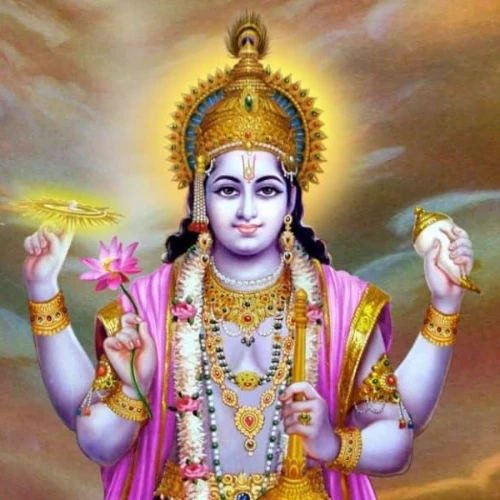
Narayana Kavach is a very powerful Vedic-Puranic stotra dedicated to Lord Vishnu. It is recited as a prayer for spiritual protection by remembering the divine name, form and various incarnations of Lord Vishnu. According to the story, when asked by King Indra, Sri Shukadeva explains the glory of Narayana Kavach and describes this divine Kavach told to Indra by Visvaroop It is considered to be the means of taking refuge in Lord Narayana and remembering His divine name. It recalls the forms of Lord Vishnu like Matsya, Vamana, Trivikrama, Narasimha, Varaha, Rama, Narayana, Nara, Kapila, Dattatreya, Sanatkumara, Hayagriwa, Dhanvantari, Rishabha, Yajna, Balarama, Vyasa, Buddha and Kalki is, but also prays to God for protection of mind, intellect, senses and life force.
Complete text of Narayana Kavach
॥ rajovach ॥
yaya guptah sahastrakshah savahan ripusainikan.
kridanniv vinirjitya trilokya bubhuje shriyam ॥1॥
bhagavanstanmamakhyahi varm narayanatmakam.
yatha aattayinah shatrun yen gupto̕jayanmrudhe ॥2॥
॥ shrishuk uvach ॥
vrutah purohito̕stvaashtro mahendrayanupruchate.
narayanaakhyam varmah tadihaikamanah shrunu ॥3॥
॥ vishvarup uvach ॥
dhautaanghripanirachamya sapavitra udangmukhah.
krutasvangakaranyaso mantrabhyam vagyatah shuchih ॥4॥
narayanamayam varm sangyed bhaya aagate.
padayorjanunoroorvorudare hrudyathorasi ॥5॥
mukhe shirasyanupurvyadonkaradini vinyaset.
om namo narayanayeti viparyayamathapi va ॥6॥
karanyasam tatah kuryad dvadashaksharavidyaya.
pranavadiyakarantamangulyangusthaparvasu ॥7॥
nyased hridaya onkaram vikaramanu murdhani.
shakaram tu bhruvormadhye nakaram shikhaya dishet ॥8॥
vekaram netrayoryunjyannakaram sarvasandhishu.
makaramastramudrishya mantramurtirbhaved budhah ॥9॥
savisargam fadantam tat sarvadikshu vinirdishet.
om vishnave nam iti ॥10॥
aatmanam paramam dhyayed dhyeyam shatshaktibhiryutam.
vidyatejastapomurtimimam mantramudaharet ॥11॥
om harirvidadhyanmam sarvaraksham nyastaanghripadmah patagendraprushthe.
daraaricharmasigadeshuchapashan dadhano̕shtaguno̕shtabahuh ॥12॥
jaleshu maam rakshatu matsyamurtiryadoganebhyo varunasya pashat.
sthaleshu maayavatuvaamano̕vyat trivikramah khe̕vatu vishvarupah ॥13॥
durgeshvatavyajimukhaadishu prabhuh payannrusinho̕surayuthparih.
vimunchato yasya mahattahasam disho vinedurnyapatanshch garbhah ॥14॥
rakshatvasau madhvani yagnyakalpah svadanshtrayonnitadharo varahah.
ramo̕drikuteshvath vipravase salakshmano̕vyad bharatagrajo̕sman ॥15॥
maamugradharmadakhilat pramadannarayanah patu narasch hasat.
dattastvayogadath yognathah payad guneshah kapilah karmabandhat ॥16॥
sanatkumaro vatu kamdevaddhayashirsha maam pathi devahelanat.
devarshivaryah purusharchanantarat kurmo harirmaam nirayadasheshat ॥17॥
dhanvantarirbhagavan patvapathyad dvandvad bhayadrushabho nirjitatma.
yagnyasch lokaadavatajjanantaad balo ganat krodhavashaadahindrah ॥18॥
dvaipayano bhagavanprabodhad buddhastu pakhandaganat pramadat.
kalkih kale kalamalaat prapatu dharmavanayorookrutavatarah ॥19॥
maam keshavo gadaya prataravyad govind aasangavamattavenuh.
narayanah prahna udattashaktirmadhyandine vishnurarindrapanih ॥20॥
devo̕parahne madhuhogradhanva sayam tridhaamavatu madhavo maam.
doshe hrushikesh utardharatre nisheeth eko̕vatu padmanabhah ॥21॥
shrivatsadhaamaparratra ishah pratyush isho̕sidharo janardanah.
damodaro̕vyadanusandhyam prabhate vishveshvaro bhagavan kalamurtih ॥22॥
chakram yugantanalatigmanemi bhramat samantaad bhagavatprayuktam.
dandagdhi dandagdhyarisainyamasu kaksham yatha vatasakho hutashah ॥23॥
gade̕shanisparshanavisfulinge nispindhi nispindhyajitapriyasi.
kooshmandavainaayakayaksharakshobhutgrahanshchoornaya choornayaarin ॥24॥
tvam yatudhanpramathapretamatrupishaachavipragrahaghoradrushtin.
darendra vidravaya krushnpurito bhimsvano̕rerhridayani kampayan ॥25॥
tvam tigmadharasivaraarisainyamishaprayukto mam chhindhi chhindhi.
charmanchhatachandra chhadaya dvishaamaghonam har papachakshushaam ॥26॥
yanno bhayam grahebhyo bhut ketubhyo nrubhya eva ch.
sarisrupebhyo danshtribhyo bhutebhyo̕anhobhya eva va ॥27॥
sarvanyetani bhagannamrupastrakirtanat.
prayantu sankshayam sadyo ye nah shreyah pratipkah ॥28॥
garoodo bhagavan stotrastobhashchhandomayah prabhuh.
rakshatvasheshakrichrebhyo vishvaksenah svanambhih ॥29॥
sarvapadbhyo harernamrupayanayudhani nah.
buddhindriyamanah pranan pantu parshadabhushanah ॥30॥
yatha hi bhagavanev vastutah sadasach yat.
satyenanen nah sarve yantu nashamupadravaah ॥31॥
yathaikaatmyanubhavanam vikalparahitah svayam.
bhushanayuddhalingakhya dhatte shakteeh svamayaya ॥32॥
tenaiv satyamanen sarvagnyo bhagavan harih.
patu sarvaih svarupairnah sada sarvatra sarvagah ॥33॥
vidikshu dikshoordhvamadhah samantaadantarbahirbhagavan narasinhah.
prahapayamlokbhayam svanen grastasamastatejaah ॥34॥
maghavannidamakhyatam varm narayanatmakam.
vijeshyasyanjasa yen danshito̕surayuthpan ॥35॥
etad dharayamanastu yam yam pashyati chakshusha.
pada va sansprushet sadyah sadhvasat sa vimuchyate ॥36॥
na kutaschit bhayam tasya vidyam dharayato bhavet.
rajdasyugrahadibhyo vyagradibhyasch karhichit ॥37॥
imam vidyam pura kaschit kaushiko dharayan dvijah.
yogadharanaya svangam jahau sa marudhanvani ॥38॥
tasyopari vimanen gandharvapatirekada.
yayo chitrarathah stribhirvruto yatra dvijakshayah ॥39॥
gaganannyapatat sadyah savimano hyavakshirah.
sa valakhilyavachanadastheenyaday vismitah.
prasya prachisarasvatyam snatva dhaam svamanvagat ॥40॥
ya idam shrunuyat kale yo dharayati chaadrutah.
tam namasyanti bhutani muchyate sarvato bhayat ॥41॥
etam vidyamadhigato vishvarupachatakratuh.
trailokyalakshmim bubhuje vinirjitya̕mrudhesuran ॥42॥
॥ iti shrimadbhagavate mahapurane shashthaskandhe narayanakavacham sampurnam ॥
Simple Hindi Meaning of Narayana Kavach
Verses 1–2: The King's Question
King Indra asks Sri Shukadeva which is the divine shield by which Indra conquered the enemies and regained the wealth of the three worlds. They request the Lord to describe that shield in the form of Narayana.
Verses 3–11: How to wear the shield of Narayana
Sri Shukadeva explains that Visvaroopa had preached the shield of Narayana to Indra. It explains the method of purifying, performing Achamana, Nyaya and meditating on Lord Narayana while remembering the power of the mantra in various parts of the body.
This section describes the twelve-letter mantra of Lord Vishnu and mantra-nyasa in various parts He prays for his protection. The Lord is meditated upon as seated on Garuda and bearing various divine weapons.
Verses 13–19: Protection from the various incarnations of the Lord
These verses recall the various incarnations of Lord Vishnu and Trivikrama
Nrishimha
in inaccessible places to protect the earth Varaha
in the forest and in exile Shri Rama
various divine forms to protect from yoga and karmabandhan
thus different of devotee life He remembers the various forms of God as his protector in circumstances.
Verses 20–22: Protection at different times of the day
These verses mention different names of Lord Vishnu for different times of the day Narayana, Vishnu at noon, Madhusoodana in the afternoon, Madhava in the evening, Hrishikesh at night and Padmanabha in the evening are remembered Mane.
Verses 23–26: Protection from Divine Weapons
These verses pray for protection from enemies and various kinds of fears by remembering God’s Chakra, Mace, Conch and other Divine Weapons. Fear arising from Ketu, human beings, reptiles, fangs, ghosts etc. is prayed to be removed by remembrance of the Lord’s name, form and weapons.
The Lord’s associates including Garuda and Vishvaksena are also remembered It is said to be the basis and omnipresent of the universe. Remembering the true nature of the Lord, protection from all kinds of troubles is prayed for.
Finally, Lord Nrishimha is prayed for protection from all directions—above, below, inside and outside.
Verses 35–42: Glory of Narayana Kavacha
is. It states that the person who possesses this divine knowledge is freed from fear.
In the same context, the story of a Brahmin named Kausika and Gandharva king Chitraratha also comes up. Finally, it is stated that Indra conquered the demons by receiving the knowledge of Narayana Kavach from Visvaroopa.
Recitation of Narayana Kavach Method
Narayana Kavach should be recited with faith and concentration. The traditional ritual mentions cleansing, performing aachamana, nyasa and meditating on Lord Narayana.
Simply:
Take a morning bath and wear clean clothes.
Clean the place of worship.
Meditate on Lord Vishnu or Sri Narayana Burn.
Offer flowers to Lord.
Calm down for a few moments and concentrate your mind.
Recite Narayana Kavach with devotion.
After reciting, pray to Lord Vishnu for protection and welfare Narayanaaya” mantra.
Note:If you want to do a detailed ritual including traditional Nyaya, it is advisable to learn the ritual from a qualified Acharya.
Benefits of Narayana Kavach
In the religious tradition, Narayana Kavach is given special importance as a Raksha-Stotra. The following spiritual benefits are considered from reciting with devotion:
Helps in reducing fear in the mind.
Increases the feeling of faith and devotion to Lord Vishnu Help.
Increase in spiritual discipline and concentration.
Remembrance and contemplation of various incarnations of God.
Sense of taking refuge in God for the welfare of family and self Mantra
These benefits should be understood as religious and spiritual beliefs.
Mantra of Narayana Kavach
॥ Om Namo Narayanaya ॥
This is a very popular mantra of Lord Vishnu and it has a special place in Narayana worship.
When should one recite Narayana Kavach?
Devotees can recite Narayana Kavach according to their convenience. Specifically:
During morning worship
In regular worship of Lord Vishnu
On Ekadashi
In Vishnu related religious rituals
Remembering God during mental fear or anxiety
Form of regular religious reading at home In
Narayana Kavach and the Incarnations of Lord Vishnu
One of the features of Narayana Kavach is that it commemorates the many incarnations of Lord Vishnu. This text gives the devotee the impression that God is the protector in different forms in every situation of life.
Matsya in water, Vamana and Trivikrama in situations related to earth and sky, Nrishimha in difficult crises, Varaha in the form of protection of earth are done.
Narayan Kavach FAQ
1. What is Narayana Kavach?
Narayana Kavach is a famous stotra related to the praise and protection of Lord Vishnu, which is described in the sixth Skanda of the Srimad Bhagavatam Mahapurana.
2. Who taught Narayana Kavach?
According to Srimad Bhagavatam, Visvaroopa taught Indra the knowledge of Narayana Kavach. Sri Shukadeva Ji told the king the description of it.
3. Narayana Kavach is found in which Purana?
Narayana Kavach is described in Sixth Skanda of Srimad Bhagavatam Mahapurana.
4. How many verses are there in Narayana Kavach?
The main episode of Narayana Kavach in the prevailing text runs for 42 verses.
5. Why is Narayana Kavach recited?
In religious tradition, Narayana Kavach is recited to seek refuge in Lord Narayana and pray for spiritual protection from various types of fears and calamities.
6. What is the main mantra of Narayana Kavach?
Narayana Kavach contains the twelve-letter mantra of Lord Narayana “Om Namo Narayanaya”.
7. Can I recite Narayana Kavach daily?
Yes, devotees can recite Narayana Kavach regularly as per their convenience.
8. When should one recite Narayana Kavach?
Narayana Kavach can be recited in the morning or during the worship of Lord Vishnu. It is also recited on occasions associated with Vishnu worship like Ekadashi.
9. What are the benefits of reading Narayana Kavach?
According to religious beliefs, recitation of it increases faith in Lord Narayana and provides mental and spiritual strength in times of fear and distress.
10. Is Narayana Kavach read for protection?
Yes. The Narayana Kavacha is traditionally read as a Kavacha praying spiritual protection from Lord Narayana.
11. Is special worship necessary to recite Narayana Kavach?
Faith, cleanliness and concentration are important for simple recitation. It is advisable to seek the guidance of a qualified teacher for detailed trust and traditional rituals.
12. Which incarnations of Lord Vishnu are mentioned in Narayana Kavach?
Narayan Kavach mentions many forms and incarnations of Lord Vishnu including Matsya, Vamana, Trivikrama, Nrishimha, Varaha, Sri Rama.