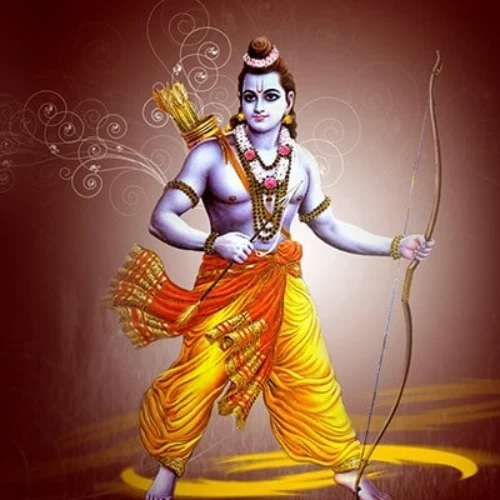
Ramashtaka is a devotional hymn dedicated to Lord Shri Rama. It praises Lord Shri Rama's divine form, his adherence to righteousness (*Maryada*), compassion, commitment to *Dharma* (duty/righteousness), and his affectionate nature towards his devotees. Reciting Ramashtaka with devotion is believed to instill peace, devotion, and positive thoughts in the mind.
Lord Shri Rama is worshipped as Maryada Purushottama—the ideal man who upholds righteousness—as well as the protector of *Dharma* and the embodiment of truth. Regular recitation of Ramashtaka is considered to strengthen one's faith and dedication to Shri Rama.
What is Ramashtaka?
The word 'Ramashtaka' is formed by combining two words: Rama + Ashtaka. 'Ashtaka' refers to a hymn consisting of eight verses or stanzas. Ramashtaka beautifully describes the glory of Lord Shri Rama.
The worship of Shri Rama is closely associated with righteousness, truth, self-restraint, an ideal way of life, and virtuous conduct. Therefore, Ramashtaka is recited not only for religious reasons but also to attain inner peace and cultivate positive thinking.
Significance of Ramashtaka
In Hinduism, Lord Shri Rama is revered as an incarnation of Lord Vishnu. His life exemplifies the ideals of truth, sacrifice, duty, and adherence to righteous conduct (Maryada).
While reciting Ramashtaka, devotees meditate on Lord Shri Rama's divine form and seek refuge in Him. There is a tradition of reciting it regularly to deepen one's devotion and faith in Lord Rama.
When should Ramashtaka be recited?
Ramashtaka can be recited with devotion on any day.
Reciting this is considered especially auspicious on these occasions:- Shri Ram Navami
- The Navaratri of Ram Navami
- Mondays, Tuesdays, and Thursdays
- During the recitation of the Ramayana or Sundarkand
- After the morning bath
- During evening worship
- While meditating on Lord Shri Ram during times of mental unrest or stress
Shri Ramashtakam – Complete Sanskrit Text
॥ Shriramashtakam ॥
bhaje visheshasundaram samastapapkhandanam.
svabhaktachittaranjanam sadaiv ramamadvayam॥1॥
jatakalapashobhitam samastapapanashakam.
svabhaktabhitibhanjanam bhaje ha ramamadvayam॥2॥
nijasvarupbodhakam krupakaram bhavapaham.
samam shivam niranjanam bhaje ha ramamadvayam॥3॥
sahaprapanchakalpitam hyanamrupavastavam.
nirakrutim niramayam bhaje ha ramamadvayam॥4॥
nisprapanchanirvikalpanirmalam niramayam.
chidekarupasantatam bhaje ha ramamadvayam॥5॥
bhavabdhipotarupakam hyasheshadehakalpitam.
gunakaram krupakaram bhaje ha ramamadvayam॥6॥
mahavakyabodhakairvirajmanavakpadaih.
param bramasadvyapakam bhaje ha ramamadvayam॥7॥
shivpradam sukhapradam bhavachidam bhramaapaham.
virajmanadaishikam bhaje ha ramamadvayam॥8॥
॥ falashruti ॥
ramashtakam pathati yah sukhadam supunyam
vyasen bhashitamidam shrunute manushyah.
vidyam shriyam vipulsaukhyamanantakirtim
samprapya dehavilaye labhate ch moksham॥9॥
॥ iti shrivyasavirachitam ramashtakam sampurnam॥
Textual Notes: Small textual variants can be found in the text of Ramashtaka in different books and traditions. The text given above is based on the Vyasa-composed version with “Bhaje Visheshasundaram...”. The available published text also gives the same 8 stotra-padas followed by phalshruti.
Hindi Meaning of Rama Ashtaka
Verse 1 – The Beautiful Form of Lord Rama
bhaje visheshasundaram samastapapkhandanam.svabhaktachittaranjanam sadaiv ramamadvayam॥1॥
meaning:I worship that unique Lord Sri Rama, who is extremely beautiful, destroyer of all sins and fills the hearts of His devotees with joy.
This verse praises the beautiful, compassionate and blissful form of Sri Rama.
Verse 2 – Sri Rama who destroys fear
jatakalapashobhitam samastapapanashakam.
svabhaktabhitibhanjanam bhaje ha ramamadvayam॥2॥
meaning:
Verse 3 – Givers of grace and enlightenment
nijasvarupbodhakam krupakaram bhavapaham.samam shivam niranjanam bhaje ha ramamadvayam॥3॥meaning:I chant the bhajan of Lord Sri Rama who is the giver of knowledge of His true nature, the ocean of grace and the liberator from the bondage of the world. They are equally minded, well-being and immaculate.This verse pays homage to Sri Rama not only as the king of Ayodhya, but as the embodiment of spiritual knowledge and liberation.
Verse 4 – Formless and unchanging form
sahaprapanchakalpitam hyanamrupavastavam.nirakrutim niramayam bhaje ha ramamadvayam॥4॥ meaning:I worship the unique Lord Sri Rama who is the basis of the entire universe, whose true nature is beyond name and form and who is formless and devoid of all kinds of defects.
Here we find the description of the supreme Brahman form of Sri Rama.
Verse 5 – Pure Consciousness Form
nisprapanchanirvikalpanirmalam niramayam.chidekarupasantatam bhaje ha ramamadvayam॥5॥ meaning:I worship the unique Lord Sri Rama who is beyond the worldly world, without alternative, pure and disease-free and is the constant pure consciousness form.
This verse describes the spiritual and divine nature of Sri Rama.
Verse 6 – Crossing the ocean of the world
bhavabdhipotarupakam hyasheshadehakalpitam.gunakaram krupakaram bhaje ha ramamadvayam॥6॥ meaning:I chant the unique Lord Sri Rama who is like a boat that crosses the ocean of the world, exists in all living beings and is a storehouse of virtues and compassion.
In this verse, Sri Rama is described as the refuge that liberates from the bondage of the world.
Verse 7 – Sri Rama, the Supreme Being
mahavakyabodhakairvirajmanavakpadaih.param bramasadvyapakam bhaje ha ramamadvayam॥7॥ meaning:I worship the unique Lord Sri Rama whose form is known by great spiritual words and who is the all-pervading Supreme Brahman.
In this verse, Sri Rama is accepted as the omnipresent supreme element.
Verse 8 – Bestowers of happiness and well-being
shivpradam sukhapradam bhavachidam bhramaapaham.
virajmanadaishikam bhaje ha ramamadvayam॥8॥
meaning:I worship the unique Lord Sri Rama who bestows welfare and happiness, eliminates the bondage of the world and removes ignorance and delusion. He shines as the best teacher.
Meaning of the fruitful scripture of Ramashtaka
ramashtakam pathati yah sukhadam supunyamvyasen bhashitamidam shrunute manushyah.
vidyam shriyam vipulsaukhyamanantakirtim
samprapya dehavilaye labhate ch moksham॥9॥
meaning:It is religiously believed that a person who recites this pleasant and pious Ramashtaka or listens to it with devotion attains knowledge, prosperity, happiness and fame. Finally, the attainment of salvation by the grace of God is described in the Phalashruti.
Simple method of reciting Ramashtaka
Take a bath and wear clean clothes.
Remember Lord Rama, Mother Sita, Lakshman and Hanuman at the place of worship.
Light lamps.
Offer flowers to Lord Rama
Calm down for some time and meditate on Sri Rama.
Recite Ramashtaka with faith and concentration.
Finally, you can chant “Sri Ram Jai Ram Jai Jai Ram”
Benefits of reciting Ramashtaka
According to religious beliefs, recitation of Ramashtaka:
Increases peace and positivity in the mind.
Strengthens faith in Lord Rama is.
The person is inspired to follow the path of righteousness and virtue.
Spiritual contemplation and spiritual discipline is promoted.
The compassionate and protective nature of Lord Sri Rama is remembered should be understood.
Which mantra should be chanted with Ramashtaka?
After reciting Ramashtaka, the following popular Rama mantra can be chanted:
॥ Shri Ram Jai Ram Jai Jai Ram ॥
Also:
॥ Om Sri Ramaya Namah ॥
can also be chanted with devotion.
Rama Ashtaka and Sri Rama Bhakti
The life of Lord Sri Rama presents the ideal of truth, righteousness, dignity, sacrifice and duty. Ramashtaka commemorates this divine form of Sri Rama.
The recitation of Ramashtaka can be made not only a stotra-recitation, but also a medium of devotion, devotion and self-contemplation towards Lord Sri Rama.
Ramashtaka FAQ
1. What is Ramashtaka?
Ramashtaka is a Sanskrit stotra composed in praise of Lord Sri Rama. It praises the beautiful, compassionate, protective and supreme Brahman form of Lord Rama.
2. Which verse does the Ramashtaka begin with?
The Ramashtaka of this edition begins with “Bhaje Visheshasundaram Samastapapakhandanam”.
3. How many verses are there in Ramashtaka?
There are mainly eight verses in Ramashtaka. This is followed by a phalashruti, so a total of nine verses appear in the text.
4. Who is the author of Ramashtaka?
This text with “Bhaje Visheshasundaram...” is traditionally called Ramashtaka composed by Sri Vyasa.
5. When should Ramashtaka be recited?
Ramashtaka can be recited in the morning or evening. It is also recited on the occasion of Sri Rama Navami, Ramayana recitation and worship of Lord Sri Rama.
6. Can I recite Ramashtaka daily?
Yes, devotees can recite Ramashtaka regularly as per their convenience.
7. What are the benefits of reciting Ramashtaka?
According to religious beliefs, recitation of Ramashtaka brings peace, positivity and spiritual inspiration to the mind. Phalashruti mentions knowledge, wealth, happiness, fame and salvation.
8. Can Ramashtaka be recited without worship?
Yes. If the entire arrangement of worship is not possible, Ramashtaka can be recited with devotion and concentration while sitting in a clean place.
9. Which mantra should be chanted after Ramashtaka?
After Ramashtaka, one can chant “Shri Ram Jai Ram Jai Jai Ram” or “Om Shri Ramaya Namah”.
10. Are Ramashtaka and Rama Raksha Stotra the same?
No. Ramashtaka and Rama Raksha Stotra are separate stotras. Ramashtaka is mainly an eight-verse recitation of praise of Lord Sri Rama, while Rama Raksha Stotra is a separate detailed stotra.