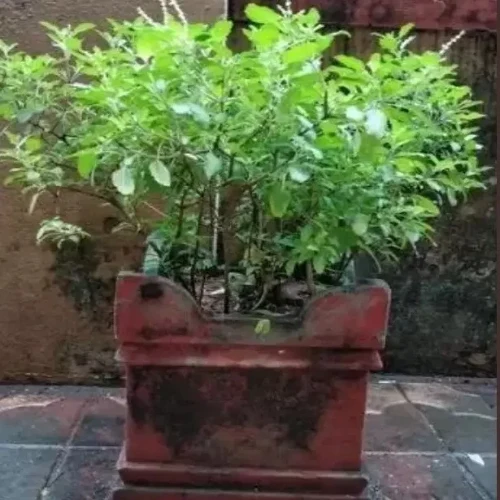
What is the Tulsi Stotram?
The Tulsi Stotram is a highly sacred Vaishnava hymn that glorifies Mother Tulsi. In this hymn, Mother Tulsi is described as the supremely beloved of Lord Sri Hari Vishnu, a manifestation of Goddess Mahalakshmi, and a deity who grants liberation (Moksha) and destroys all sins.
In Sanatan Dharma, the Tulsi plant is not merely considered a medicinal herb but is revered as the physical embodiment of Goddess Tulsi herself. The worship of Lord Vishnu, Sri Krishna, Sri Rama, and Lord Shaligram is considered incomplete without the offering of Tulsi leaves.
Religious Significance of the Tulsi Stotram
Regular recitation of the Tulsi Stotram invokes the special grace of Lord Vishnu and Goddess Lakshmi. This hymn brings peace of mind, happiness and prosperity to the home, and fosters spiritual growth.
According to the scriptures, merely seeing, touching, worshipping, or remembering the Tulsi plant can eradicate sins accumulated over many lifetimes.Benefits of Reciting the Tulsi Stotram
- One receives the grace of Lord Vishnu and Goddess Lakshmi.
- Happiness, peace, and prosperity enter the home.
- Financial obstacles gradually begin to resolve.
- Negative energy and mental stress are reduced.
- Love and harmony are maintained within the family.
- Sins are washed away, and merit (punya) increases.
- The path to spiritual growth and salvation (Moksha) is paved.
- One attains auspicious results regarding marriage and progeny.
- One receives blessings of protection against diseases and fear.
Correct Method of Reciting the Tulsi Stotram
- Bathe in the morning and wear clean clothes.
- Offer a lamp (diya) and water to the Tulsi plant.
- If possible, place an idol of Lord Vishnu or Lord Krishna.
- Chant the mantra "Om Namo Bhagavate Vasudevaya" 11 or 108 times.
- Recite the Tulsi Stotram with devotion.
- Finally, perform the Aarti of Mother Tulsi and Lord Vishnu.
- Distribute Prasad to all family members.
When Should the Tulsi Stotram Be Recited?
- Every morning
- Thursdays
- Ekadashi
- During the month of Kartik
- Tulsi Vivah
- Dev-Uthani Ekadashi
- During special worship of Lord Vishnu or Lord Krishna
What Offerings Should Be Made During Tulsi Puja?
- Pure water
- Lamp (diya)
- Incense (Dhoop)
- Unbroken rice grains (Akshat)
- Sandalwood paste (Chandan)
- Flowers
- Food offering (Naivedya)
- Tulsi leaves (Dal) for Lord Vishnu
Rules for Tulsi Puja
- According to general tradition, Tulsi leaves are not plucked on Sundays or Dwadashi (the 12th day of the lunar fortnight).
- Tulsi leaves should not be plucked after sunset.
- Do not pluck Tulsi leaves without bathing. ...should be done.
- Offering water to the Tulsi plant daily is considered auspicious.
Tulsi Stotra
Verse 1
Jagaddhaatri namastubhyn viṣṇaoshch priyavallabhe ।yato brahmaadayo devaah sriṣṭisthityantakaariṇaah ॥1॥
जगद्धात्रि नमस्तुभ्यं विष्णोश्च प्रियवल्लभे ।
यतो ब्रह्मादयो देवाः सृष्टिस्थित्यन्तकारिणः ॥१॥
Meaning:
O Mother Tulsi, sustainer of the entire universe! Salutations to You. You are exceedingly dear to Lord Vishnu. It is by Your grace alone that Brahma, Vishnu, and Mahesh perform the tasks of creation, preservation, and dissolution of the universe, respectively.
Verse 2
namastulasi kalyaaṇai namo viṣṇaupriye shubhe ।namo mokṣaprade devi namah sampatpradaayike ॥2॥
नमस्तुलसि कल्याणि नमो विष्णुप्रिये शुभे ।
नमो मोक्षप्रदे देवि नमः सम्पत्प्रदायिके ॥२॥
Meaning:
O Mother Tulsi—bestower of well-being, embodiment of auspiciousness, and beloved of Lord Vishnu—I offer my repeated salutations to You. You are the Goddess who grants liberation and bestows wealth, opulence, and prosperity.
Verse 3
tulasee paatu maan nityn sarvaapadbhyo. Api sarvadaa ।
keertitaapi smritaa vaapi pavitrayati maanavam ॥3॥
तुलसी पातु मां नित्यं सर्वापद्भ्योऽपि सर्वदा ।
कीर्तितापि स्मृता वापि पवित्रयति मानवम् ॥३॥
Meaning:
O Mother Tulsi! May You always protect me from all kinds of calamities. A person becomes purified merely by uttering or remembering Your name.
Verse 4
namaami shirasaa deveen tulaseen vilasattanum ।
yaan driṣṭvaa paapino martyaa muchyante sarvakilbiṣaat ॥4॥
नमामि शिरसा देवीं तुलसीं विलसत्तनुम् ।
यां दृष्ट्वा पापिनो मर्त्या मुच्यन्ते सर्वकिल्बिषात् ॥४॥
Meaning:
I bow my head in reverence to the radiant Goddess Tulsi; the mere sight of Her liberates sinful beings from their sins.
Verse 5
tulasyaa rakṣitn sarvn jagadetachcharaacharam ।
yaa vinihanti paapaani driṣṭvaa vaa paapibhirnaraiah ॥5॥
तुलस्या रक्षितं सर्वं जगदेतच्चराचरम् ।
या विनिहन्ति पापानि दृष्ट्वा वा पापिभिर्नरैः ॥५॥
Meaning:
This entire world—comprising both animate and inanimate beings—is protected by the grace of Mother Tulsi. The mere sight of Her causes a person's sins to begin to vanish.
Verse 6
namastulasyatitaraan yasyai baddhvaa~njalin kalau ।
kalayanti sukhn sarvn striyo vaishyaastathaa. Apare ॥6॥
नमस्तुलस्यतितरां यस्यै बद्ध्वाञ्जलिं कलौ ।
कलयन्ति सुखं सर्वं स्त्रियो वैश्यास्तथाऽपरे ॥६॥
Meaning:
In the Kali Yuga, any person—whether a woman, a Vaishya, or anyone else—who bows to Mother Tulsi with folded hands and reverence attains happiness and auspiciousness in life.
Verse 7
Tulasyaa naaparn ki~nchid daivatn jagateetale ।
yathaa pavitrito loko viṣṇausa~ngen vaiṣṇaavah ॥7॥
तुलस्या नापरं किञ्चिद् दैवतं जगतीतले ।
यथा पवित्रितो लोको विष्णुसङ्गेन वैष्णवः ॥७॥
Meaning:
There is no other divine form on this earth as sacred as Tulsi. Just as a devotee of Lord Vishnu is considered holy, Tulsi, too, sanctifies the world.
Verse 8
tulasyaah pallavn viṣṇaoah shirasyaaropitn kalau ।
aaropayati sarvaaṇai shreyaansi varamastake ॥8॥
तुलस्याः पल्लवं विष्णोः शिरस्यारोपितं कलौ ।
आरोपयति सर्वाणि श्रेयांसि वरमस्तके ॥८॥
Meaning:
In the Kali Yuga, a person who offers a Tulsi leaf upon the forehead of Lord Vishnu attains all manner of auspicious results and well-being in their life.
Verse 9
tulasyaan sakalaa devaa vasanti satatn yatah ।
atastaamarchayelloke sarvaan devaan samarchayan ॥9॥
तुलस्यां सकला देवा वसन्ति सततं यतः ।
अतस्तामर्चयेल्लोके सर्वान् देवान् समर्चयन् ॥९॥
Meaning:
It is believed that all the deities reside within Mother Tulsi; therefore, whoever worships Tulsi is considered to be worshipping all the deities.
Verse 10
namastulasi sarvagye puruṣottamavallabhe ।
paahi maan sarvapaapebhyah sarvasampatpradaayike ॥10॥
नमस्तुलसि सर्वज्ञे पुरुषोत्तमवल्लभे ।
पाहि मां सर्वपापेभ्यः सर्वसम्पत्प्रदायिके ॥१०॥
Meaning:
O all-knowing Mother Tulsi, beloved of the Supreme Lord Purushottama Sri Hari! Protect me from all sins and bestow upon me every form of happiness and prosperity.
Verse 11
iti stotrn puraa geetn puṇaḍaareekeṇa dheemataa ।
viṣṇaumarchayataa nityn shobhanaistulaseedalaiah ॥11॥
इति स्तोत्रं पुरा गीतं पुण्डरीकेण धीमता ।
विष्णुमर्चयता नित्यं शोभनैस्तुलसीदलैः ॥११॥
Meaning:
This sacred hymn was composed in ancient times by the wise devotee Pundarika, who worshipped Lord Vishnu daily with beautiful Tulsi leaves.
Verse 12
tulasee shreermahaalakṣmeervidyaavidyaa yashasvinee ।
dharmyaa dharmaananaa devee deveedevamanahpriyaa ॥12॥
तुलसी श्रीर्महालक्ष्मीर्विद्याविद्या यशस्विनी ।
धर्म्या धर्मानना देवी देवीदेवमनःप्रिया ॥१२॥
Meaning:
Mother Tulsi herself embodies Shri (prosperity), Mahalakshmi, knowledge, fame, and righteousness, and is a form cherished even by the gods. She is exceedingly dear to the Lord.
Verse 13
lakṣmeepriyasakhee devee dyaurbhoomirachalaa chalaa ।
ṣoḍaashaitaani naamaani tulasyaah keertayannarah ॥13॥
लक्ष्मीप्रियसखी देवी द्यौर्भूमिरचला चला ।
षोडशैतानि नामानि तुलस्याः कीर्तयन्नरः ॥१३॥
Meaning:
Mother Tulsi is a beloved companion of Goddess Lakshmi. She is revered in both heaven and on earth. A person who remembers these sixteen sacred names of hers attains special merit.
Verse 14
labhate sutaraan bhaktimante viṣṇaupadn labhet ।
tulasee bhoormahaalakṣmeeah padminee shreerharipriyaa ॥14॥
लभते सुतरां भक्तिमन्ते विष्णुपदं लभेत् ।
तुलसी भूर्महालक्ष्मीः पद्मिनी श्रीर्हरिप्रिया ॥१४॥
Meaning:
Whoever remembers Mother Tulsi with devotion attains devotion to Lord Vishnu and, at the time of death, reaches the Lord's supreme abode. Mother Tulsi is the embodiment of Goddess Mahalakshmi and is beloved to Sri Hari.
Verse 15
tulasi shreesakhi shubhe paapahaariṇai puṇayade ।
namaste naaradanute naaraayaṇaamanahpriye ॥15॥
तुलसि श्रीसखि शुभे पापहारिणि पुण्यदे ।
नमस्ते नारदनुते नारायणमनःप्रिये ॥१५॥
Meaning:
O Mother Tulsi—embodiment of auspiciousness, companion of Goddess Lakshmi, destroyer of sins, and bestower of merit—I offer my salutations to you. Even the divine sage Narada sings your praises, and you are exceedingly dear to Lord Narayana.
Essence of the Stotra
In this stotra, Mother Tulsi is described as the supreme beloved of Lord Vishnu, a manifestation of Goddess Mahalakshmi, and a deity who destroys sins, grants liberation (Moksha), and bestows happiness and prosperity. Whoever worships, praises, and remembers Mother Tulsi with faith and devotion experiences auspiciousness, spiritual progress, the grace of Lord Vishnu, and ultimately attains liberation.
Spiritual Message of the Tulsi Stotram
The Tulsi Stotram conveys a message of truth, devotion, purity, and surrender to Lord Vishnu. It is not merely a hymn of praise but a divine path to align one's life with Dharma (righteousness), virtuous conduct, and devotion to God.
Frequently Asked Questions (FAQ)
1. When should the Tulsi Stotram be recited?
Reciting it daily in the morning, as well as on Ekadashi, Thursdays, during the month of Kartik, and on the day of Tulsi Vivah, is considered especially auspicious and rewarding.
2. Can women recite the Tulsi Stotram?
Yes, both men and women can recite it with reverence and a pure heart.
3. What are the benefits of reciting the Tulsi Stotram?
It brings the grace of Lord Vishnu, the attainment of Goddess Lakshmi's blessings, mental peace, family happiness, and spiritual progress, while also cleansing one of sins.
4. Can the Stotram be recited without a Tulsi plant present?
Yes, it can be recited anywhere with faith and devotion. However, its significance is considered even greater if a Tulsi plant is present in the home.
5. Can the Tulsi Stotram be recited daily?
Yes, its daily recitation is considered extremely auspicious and meritorious.
In Sanatan Dharma, Mother Tulsi symbolizes purity, devotion, and surrender to Lord Vishnu. Regular recitation of the Tulsi Stotram paves the way for happiness, prosperity, mental peace, and spiritual advancement in life. Worshipping Tulsi with faith and belief is believed to bring positive transformation to a person's life.
॥ Victory to Mother Tulsi ॥
॥ Om Namo Bhagavate Vasudevaya Namah ॥